The best way to avoid running out of diesel during planting season is to estimate fuel demand early and schedule bulk fuel delivery before peak demand. For many Northern Indiana farms, the busiest planting stretches between late April and May leave very little margin for fuel delays once equipment is running. Let’s explore some essential strategies for effective fuel planning during planting season.
Why Fuel Runs Out at Planting (and What It Costs You)
As many Indiana and Southwest Michigan farmers know, spring planting windows can be narrow due to unpredictable weather patterns. This small window of time for planting can create some exceedingly long operating days, requiring multiple diesel-consuming machines to be running all day. A fuel interruption during this time can cost a farm more than just fuel. It can cost valuable field time during the brief workable conditions.
This is why fuel planning is essential, especially for midwestern farms. Retail station delays and refill trips can add up significantly. Fuel delivery may not be an option without advance planning, as delivery demands spike during peak planting weeks. An accurate fuel plan can help Indiana and Michigan farmers ensure they have the fuel they need for a successful planting season.
Estimating Fuel Demand for Your Planting Window
One of the biggest mistakes farm ops can make during planting season is underestimating how quickly diesel usage adds up once equipment starts moving. Fuel demand is not just tied to acreage. It can be impacted by field conditions, equipment size, tillage practices, weather conditions, and how many machines run at the same time. This means that fuel usage may change from year to year.
For many Northern Indiana and Southwest Michigan farms, planting happens within a relatively short weather window between late April and May. When field conditions finally cooperate, fuel usage can spike quickly as operators try to maximize productive hours.
While every operation is different, these are common planning estimates for row crop operations:
| Equipment or Task | Typical Diesel Usage |
| Row crop tractor during planting | 8–15 gallons per hour |
| Corn or soybean planting pass | ~0.4–0.8 gallons per acre |
| Heavy tillage pass | ~1–3 gallons per acre |
| Grain cart or support equipment | Variable based on usage |
Depending on the number of tractors, planters, and support vehicles operating, a 1000-acre farm operation may move through fuel at different speeds. Wet conditions may also increase fuel burn if fields require additional tillage passes or equipment spends more time idling and transporting between fields.
Most operations benefit from estimating fuel demand for a 7-14-day uninterrupted planting stretch, rather than using average daily use to determine fuel needs. This creates more flexibility when weather windows tighten and delivery schedules become busier.
How Much On-Farm Storage Do You Actually Need?
The right amount of on-farm fuel storage depends on more than acreage alone. Planting pace, delivery availability, number of machines running simultaneously, and weather conditions all affect how much diesel a farm should realistically keep on hand during peak season.
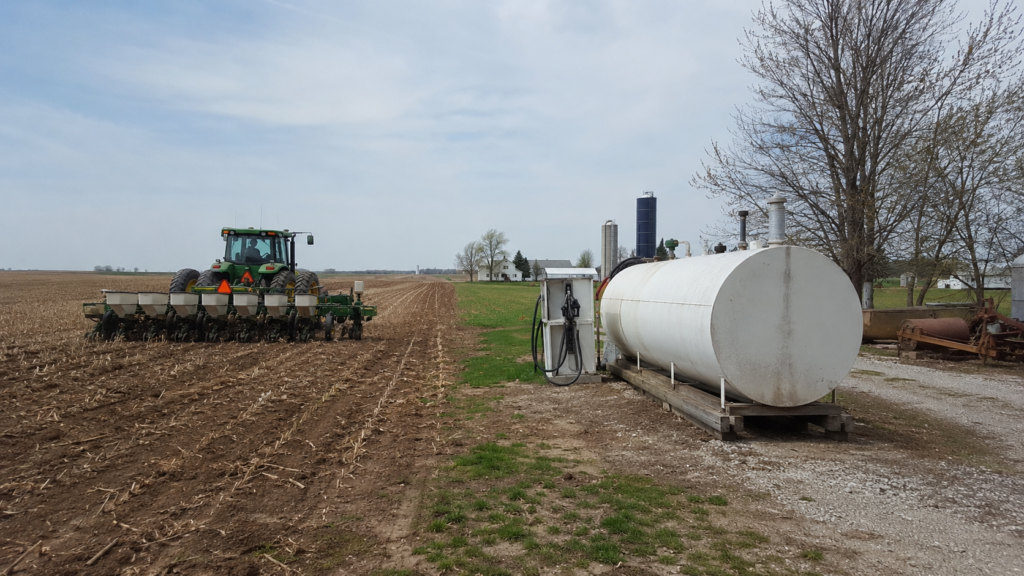
For smaller operations, a 300 to 500-gallon tank may be enough to support a few days of planting activity. Larger row crop operations often rely on 1,000-gallon tanks or multiple storage setups to reduce refill frequency during narrow planting windows.
Every farm will have different fuel needs, but here is a brief breakdown of some common fuel tank setups for different farm sizes:
| Farm Size / Usage Pattern | Common Tank Setup |
| Small acreage/backup fueling | 300–500 gal |
| Mid-size row crop operation | 500–1,000 gal |
| Larger operations / multiple machines | 1,000+ gal |
The goal of fuel storage isn’t to store all fuel for the season. Rather, it is to ensure farms have enough fuel to keep continuous operations when it matters most, without relying on emergency fuel delivery.
Farm operators should be sure to account for the weather realities of Northern Indiana and Southwest Michigan. A week of spring rain can dramatically compress planting activity as fields start to dry out, forcing higher machine usage. This can drastically change average daily diesel needs.
Tank accessibility matters too. Muddy conditions, blocked lanes, or poorly placed tanks can slow down fueling during long planting days. Many farms benefit from positioning storage where fuel transfers remain efficient even during wet spring conditions.
Finally, storage size should be paired with proper fuel management practices. Larger tanks may hold fuel longer, making water control, filtration, and seasonal maintenance increasingly important for protecting fuel quality over time.
Locking In Supply Before the Rush
Fuel planning becomes more difficult once planting is already underway. Across Northern Indiana and Southwest Michigan, demand for off-road diesel often spikes during narrow weather windows in late April and May, especially after several days of rain delay fieldwork.
The challenge is usually timing, not overall fuel availability. When workable conditions return, farms across counties like Marshall, Elkhart, Kosciusko, and St. Joseph may all need deliveries at the same time, tightening schedules quickly.
That is why many operations plan fuel deliveries before peak planting begins. Confirming storage capacity, estimating fuel usage, and scheduling deliveries early helps reduce the risk of delays once equipment is running.
Lead times may also vary depending on weather and regional demand. During compressed planting windows, keeping additional reserve fuel on site can provide flexibility if conditions change quickly or field activity accelerates faster than expected.
Bulk Supplier vs Retail Station: When Each Makes Sense
For many farms, the decision between bulk fuel delivery and retail fueling is not always either-or. Either option can make sense depending on strategy, equipment usage, storage conditions, and planting schedules.
Bulk fuel delivery is often the more practical choice for farms running multiple diesel-powered machines during long planting days. Having fuel stored on site reduces time spent making refill trips and allows operators to refuel equipment quickly between field passes. It can also simplify fuel management during narrow weather windows when every productive hour matters.
Retail stations, however, still serve an important role for many operations. Smaller farms or operations with lower seasonal fuel usage may prefer retail fueling to avoid maintaining large storage tanks or managing on-farm inventory year-round. Retail access can also function as a backup option during unexpected demand spikes or delayed deliveries.
Here is a general comparison:
| Bulk Fuel Delivery | Retail Fuel Stations |
| Convenient for high-volume operations | Useful for lower or variable fuel usage |
| Reduces refill trips during planting | No large storage setup required |
| Supports overnight or early fueling | Flexible for smaller operations |
| Requires on-farm storage and planning | Fuel availability may vary during peak demand |
Many farms use a combination of both approaches, relying on bulk off-road diesel deliveries for primary planting operations while using retail stations as supplemental backup when needed.
Backup Plans When the Weather Window Shifts
No matter how much you plan, weather can often change fuel demand timing more than total seasonal usage. The unpredictability of spring weather in Indiana and Michigan can quickly change farm strategies and condense the planting season. When those spring rains hit, fuel consumption can spike dramatically.
That is why many farms build backup fuel plans during the planning phase. Maintaining some reserve fuel on-site can help reduce pressure if deliveries become harder to schedule during busy periods or if retail refueling is too time-consuming. Even an extra day or two of fuel supply can create valuable flexibility when weather conditions suddenly change.
It also helps to monitor fuel usage daily once planting begins. Wet fields, additional tillage passes, and longer operating hours can all increase diesel consumption faster than expected. Farms relying heavily on retail fueling may also want a backup option identified ahead of time in case local stations experience higher demand or limited availability during peak activity.
A Planting Season Fuel Checklist
Here’s a quick guide for how to plan for and monitor fuel usage during planting season:
3 to 6 Months Before Planting:
- Estimate gallons needed
- Confirm delivery schedule
- Review backup fueling options
1 to 3 Months Before Planting:
- Inspect storage tanks and perform repairs
- Check transfer pumps and filters
- Receive bulk delivery of diesel
During Planting:
- Monitor daily fuel consumption
- Track weather changes
- Avoid letting tanks drop too low
- Confirm reorder timing early
After Planting:
- Stabilize leftover fuel if storing long-term
- Inspect tanks for water or contamination
FAQ about Fuel Planning for Planting Season
How many gallons of diesel does planting use per acre?
Fuel consumption during planting depends on a multitude of factors, including the type of machinery, the number of machines running, field conditions, and more. Generally, however, farm operators can plan on 0.5-3.0 gallons of diesel per acre.
When should I order fuel for planting season?
Planning ahead is crucial to ensure farm operations have enough fuel during peak operating times. That means if planting is planned for late April or early May, fuel orders should be placed during the winter months (December through February).
What is the difference between off-road and on-road diesel?
Off-road diesel is diesel that is tax-exempt and dyed red. This kind of fuel is for on-farm use only and is illegal for highway use.
Can off-road diesel be stored on the farm year-round?
The short answer is yes, off-road diesel can be stored year-round. However, it is recommended to use diesel within 6-12 months, as it can degrade in quality over time.
Planting season fuel planning is ultimately about reducing interruptions during the busiest and most time-sensitive part of the spring. Farms that estimate fuel demand early, maintain realistic storage capacity, and plan deliveries ahead of peak weather windows are usually better positioned to keep equipment moving when field conditions finally cooperate.
Bellman Oil helps farms from Marshall and Fulton in Northern Indiana to Van Buren and Cass in Southwest Michigan plan reliable off-road diesel delivery around real planting schedules and changing field conditions. Contact Bellman today to learn more about how to prepare for planting season.