This article is informational only and should not be considered legal or regulatory advice. Requirements may vary based on facility type, tank design, and operational use. Businesses should verify obligations directly with EPA, IDEM, or qualified compliance professionals.
Many Indiana businesses do not realize they crossed the federal SPCC threshold until an inspection or fuel delivery expansion forces the issue. If a facility stores more than 1,320 gallons of oil in aboveground containers, EPA Spill Prevention, Control, and Countermeasure (SPCC) requirements may apply under 40 CFR Part 112. Beyond this regulation, the state of Indiana layers in additional regulations and requirements to keep local waters and wildlife safe from potential oil spills. Understanding what regulations apply and when can be challenging for fleet managers, farm operators, and other commercial diesel users. Let’s take a closer look at what bulk fuel storage regulations exist in Indiana and how they apply.
The Short Answer: When SPCC Applies in Indiana
SPCC refers to the federal Spill Prevention, Control, and Countermeasure (SPCC) rule under the Environmental Protection Agency (EPA 40 CFR Part 112). This regulation exists to protect wildlife, shorelines, and groundwater in the United States from potential oil contamination. For most Indiana businesses, SPCC requirements begin when a facility stores more than 1,320 gallons of oil in aboveground containers and could reasonably discharge oil into navigable waters or adjoining shorelines. It is important to note that underground storage is regulated differently and has its own requirements and limits.
Many farm operators, fleet managers, and facilities managers find some confusion with SPCC. One of the biggest sources of confusion is that SPCC looks at a facility’s total aggregate oil storage capacity. This means that inspectors are looking at all fuel storage containers together, rather than individually. That means multiple smaller tanks, drums, totes, or portable containers may collectively push a site over the threshold even if no single tank exceeds 1,320 gallons on its own. Ultimately, storage containers that hold diesel, gasoline, hydraulic oil, lubricating oil, heating oil, waste oil, or other oil-based products may be subject to this regulation.
Common Fuel Storage Scenarios and Applicable Regulations
| Tank Setup | Federal SPCC Trigger | Additional Indiana Oversight |
| Aboveground storage over 1,320 gallons | SPCC may apply | IDEM + Fire Marshal |
| Underground storage over 42,000 gallons | UST regulations apply | Indiana UST program |
| Farm tanks | May still require SPCC | Varies by setup |
| Portable totes/drums | Count toward aggregate capacity | Depends on use/storage |
Because fuel storage compliance depends heavily on facility layout, drainage pathways, and operational use, businesses should confirm requirements directly with EPA guidance, IDEM resources, or qualified compliance professionals before assuming they are exempt.
What SPCC Actually Requires
Once a facility exceeds the federal SPCC threshold, compliance involves more than simply storing fuel safely. Under EPA 40 CFR Part 112, facilities must take reasonable steps to prevent oil spills and limit environmental impact if a release occurs. This regulation requires facilities with large fuel storage facilities to create a documented plan for fuel storage setup, spill prevention procedures and protections, inspection schedules, and spill-response protocols. An SPCC plan should reflect actual site conditions, including tank locations, drainage patterns, and containment systems.
Most SPCC plans include:
- Tank inventory and storage capacities
- Facility diagrams
- Spill prevention and response procedures
- Inspection and maintenance schedules
- Employee training documentation
- Secondary containment descriptions
Secondary Containment
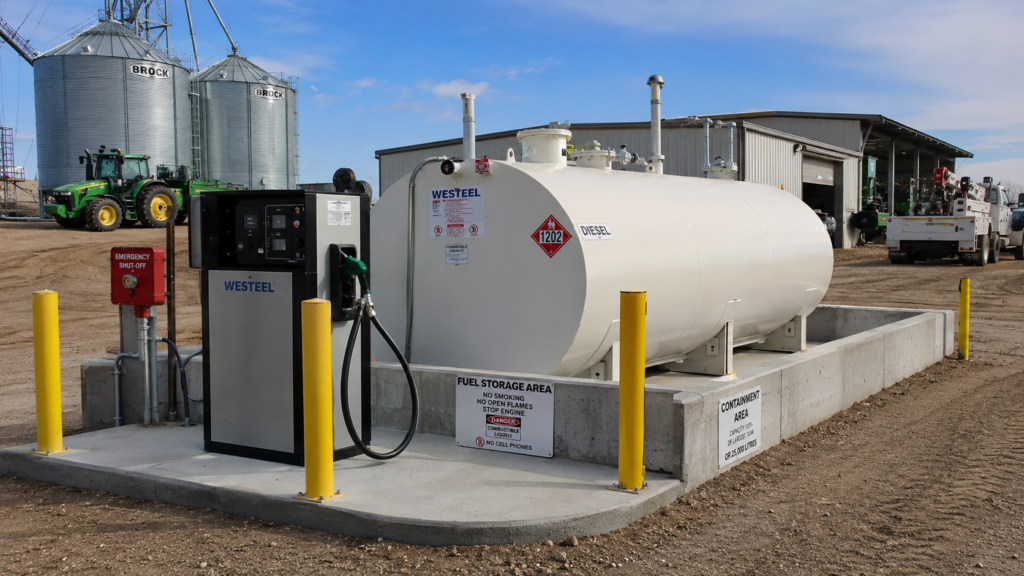
Secondary containment is an essential, yet challenging component of compliance. This part of the regulation seeks to add additional protection to fuel storage areas to prevent potential spills. This may include concrete berms, double-wall tanks, spill pallets, or other systems designed to prevent fuel from reaching soil, storm drains, or waterways during a spill.
Inspections
Facilities are also expected to schedule regular external inspections, perform internal inspections, and maintain records showing ongoing compliance efforts. Inspectors will likely review documentation, tank condition, containment integrity, and employee training procedures. Most operators are surprised that documentation failures are among the most common inspection findings. This is why keeping clear, accurate records of maintenance and fuel storage is essential to compliance.
It is important to note that SPCC does not only apply to facilities located directly beside lakes or rivers. If the EPA determines that there is any way that spilled fuel could possibly reach waterways, this rule will apply.
Indiana-Specific Rules and Agencies
In addition to federal regulation, the state of Indiana also has rules and agencies that may impact bulk fuel storage compliance. Depending on the tank setup, size, and facility type, operators may fall under oversight from the Indiana Department of Environmental Management (IDEM), the Indiana State Fire Marshal, and local fire or building authorities.
In general, Indiana regulations focus on areas like tank registration, fire code compliance, and tank construction standards. Similar to federal regulations, aboveground and underground tanks are treated differently under Indiana rules. Underground storage systems typically face stricter monitoring, leak detection, and reporting requirements, while aboveground systems are more closely tied to fire code, containment, and spill prevention standards.
Importantly, Indiana oversight does not replace federal SPCC requirements. Facilities may need to comply with both federal and state rules simultaneously, depending on storage capacity, fuel type, and operational use.
Because requirements can vary significantly by facility and tank configuration, operators should confirm current obligations directly with IDEM, the State Fire Marshal, or qualified compliance professionals before making assumptions about exemptions or applicability.
Aboveground vs Underground Tanks: Why the Rules Are Different
Aboveground tanks and underground tanks are regulated differently because they present different environmental risks. Some operators prefer aboveground systems because inspections and maintenance are more visible and manageable.
Aboveground tanks are easier to inspect since leaks, corrosion, and damage are typically visible. Most AST systems are regulated through SPCC requirements and fire code standards.
Underground tanks pose a greater groundwater contamination risk because leaks can go unnoticed for long periods. As a result, UST systems are generally subject to stricter requirements, including:
- Leak detection systems
- Corrosion protection
- Spill and overfill prevention equipment
- State registration and monitoring requirements
In Indiana, underground tank programs are overseen through IDEM and often involve more extensive documentation and compliance obligations than aboveground systems.
Are Farms Exempt from SPCC?
The EPA has streamlined many requirements and regulations for farms, making it easier for them to operate. However, if they store more than 1,320 gallons of oil in aboveground containers, a spill could reasonably reach nearby waterways, SPCC may still apply.
Since SPCC looks at aggregate storage, even seasonal diesel containers or partially filled containers can count towards this 1,320 gallons, which can push farm operations over the threshold.
Indiana agricultural operations may also need to consider additional fire code, containment, or local permitting requirements depending on tank setup and location.
Building an SPCC Plan: What Is Actually Required?
While every facility is different, most SPCC plans include a core set of required elements designed to reduce spill risk and document compliance efforts.
Typical SPCC Plan Checklist
- Facility diagram showing tank and equipment locations
- List of oil storage containers and capacities
- Spill prevention and fuel transfer procedures
- Secondary containment descriptions
- Inspection and maintenance schedules
- Employee training procedures and records
- Spill response and emergency contact information
- Drainage patterns and discharge prevention measures
- Documentation of tank testing or integrity inspections, when applicable
Some facilities may also need Professional Engineer certification, depending on total storage capacity and EPA classification rules.
Ultimately, a facility’s SPCC plan should reflect actual site conditions, not a generic template or the ideal situation. Inspectors are looking at these written procedures and comparing them with what is actually going on in the facility.
What Do Inspectors Typically Look For During an Inspection?
During an SPCC inspection, regulators are generally looking for evidence that a facility is actively working to prevent and respond to spills. Inspectors will compare the written SPCC Plan against actual site conditions to confirm procedures are being followed.
Common inspection focus areas include:
- Missing or outdated SPCC plans
- Damaged tanks or visible leaks
- Poorly maintained secondary containment
- Missing inspection or maintenance records
- Lack of employee training documentation
- Inadequate spill response equipment
- Unlabeled tanks or transfer lines
- Drainage pathways that could allow fuel to leave the site
Many compliance issues are tied to documentation and maintenance gaps rather than actual spill events. Consistent inspections, updated records, and properly maintained containment systems can significantly reduce compliance risks during an inspection.
When Do You Need a Professional Engineer?
Some facilities may self-certify their SPCC plans, but larger or more complex operations often require certification from a licensed Professional Engineer (PE). A PE certification confirms that a plan follows good engineering practices and is actually realistic for a facility.
In general, facilities with more than 10,000 gallons of aggregate aboveground oil storage capacity are more likely to need PE certification under EPA SPCC Qualified Facility rules. The engineer reviews the SPCC Plan to confirm it follows accepted engineering practices and adequately addresses spill prevention and containment risks.
Smaller facilities with limited spill history may qualify for streamlined “Tier I” or “Tier II” self-certification options, including some farms and small businesses. However, those exemptions are highly specific and should be verified carefully before assuming they apply.
Working With Your Fuel Supplier on Compliance
While facility owners are ultimately responsible for SPCC compliance, fuel suppliers can still play an important supporting role. An experienced supplier, such as Bellman Oil, can help businesses make practical decisions about fuel storage, delivery logistics, and operational best practices to support safer, more reliable fuel management.
Fuel suppliers may assist with:
- Safety Data Sheets (SDS) and product documentation
- Delivery records and fuel tracking
- Fuel storage and tank sizing recommendations
- Seasonal fuel guidance, including tank cleaning
- Fuel quality management and contamination prevention
- Coordination with tank contractors or service providers
For operations storing diesel long term, fuel quality management is especially important. Contaminated fuel, water intrusion, or poorly maintained tanks can create operational problems alongside compliance concerns. Regular tank inspections, proper storage practices, and fuel maintenance services may help reduce those risks.
Businesses should also remember that suppliers are not typically responsible for creating SPCC plans or providing legal compliance determinations. Regulatory obligations ultimately remain with the facility owner or operator.
For Indiana farms, fleet operations, and industrial facilities, working with a knowledgeable fuel supplier, like Bellman Oil, can help simplify day-to-day fuel management while supporting broader spill prevention and storage goals.