Antifreeze and coolant are closely related, but they are not always the same thing. Antifreeze is typically the concentrated liquid that protects an engine from freezing, overheating, and corrosion, while coolant is usually antifreeze that has been mixed with water and is ready to circulate through the cooling system. In everyday conversation, the terms are often used interchangeably, but understanding the difference can help you choose the right product for your truck, tractor, or equipment.
Antifreeze vs. Coolant: What’s the Difference?
The easiest way to understand the difference is to think of antifreeze as an ingredient and coolant as the finished product.
Antifreeze is the concentrated chemical solution that provides freeze protection, raises the boiling point of the cooling system, and contains additives that help prevent corrosion and scale buildup. Most concentrated antifreeze must be mixed with water, typically distilled or deionized water, before it’s added to an engine.
Coolant is the fluid that actually circulates through the engine and radiator to regulate temperature. In many cases, it’s simply antifreeze that’s already been mixed with water at the proper ratio, although some equipment owners mix concentrate themselves. The terminology becomes confusing because many products on store shelves are labeled simply as “antifreeze,” even when they’re already pre-mixed coolant. That’s why it’s always worth reading the label before making a purchase.
Why Are the Terms Used Interchangeably?
For most drivers and equipment owners, there isn’t much practical difference in everyday conversation. Someone might say they need “antifreeze” when they’re topping off the cooling system, even if they’re actually adding pre-mixed coolant.
Manufacturers and retailers also contribute to the confusion. Product packaging often emphasizes the word “antifreeze” because it’s more familiar, while the product itself may already be diluted and ready to use.
The most important thing is making sure you’re using a product that meets your equipment manufacturer’s specification.
Which One Does Your Equipment Need?
The right product depends less on whether it’s labeled antifreeze or coolant and more on the type of engine you’re maintaining.
Diesel Engines
Many modern diesel engines use heavy-duty coolants formulated to protect against corrosion, cavitation, and other conditions common in high-compression engines. Some require specific additive packages or extended-life coolant formulations, while others have different maintenance requirements. Always follow the coolant specification listed by the engine or equipment manufacturer rather than choosing a product based solely on color or brand.
Gasoline Engines
Gasoline-powered vehicles also require coolant that meets the manufacturer’s specifications. Modern passenger vehicles often use extended-life coolants designed for longer service intervals, but the correct formulation varies by manufacturer. If you’re replacing coolant or topping off the system, use a compatible product recommended for your vehicle.
Agricultural Equipment
Tractors, combines, skid steers, sprayers, and other agricultural equipment often operate under heavy loads and in demanding conditions. Many newer machines use extended-life coolants designed specifically for diesel engines, while older equipment may use more traditional formulations.
Because requirements vary between manufacturers and even between different engine models, it’s always best to verify the recommended coolant before servicing your equipment.
Should You Buy Concentrate or Pre-Mixed Coolant?
Both options provide the same protection when used correctly. The right choice often comes down to convenience and how your operation is maintained.
Concentrated antifreeze is typically more economical for shops, fleets, and farms that service multiple pieces of equipment. It also allows you to mix coolant to the concentration recommended by the manufacturer or for your operating conditions.
Pre-mixed coolant offers convenience because it’s already diluted with the proper type of water. This eliminates the need to measure and mix the solution yourself while helping prevent dilution errors.
For many individual vehicle owners, pre-mixed coolant is the simplest option. Larger operations that regularly maintain equipment often prefer concentrate for greater flexibility and lower cost per gallon.
Can You Mix Different Coolants?
In general, it’s best not to mix different coolant types unless the manufacturer specifically states they’re compatible. Different coolants use different corrosion inhibitor technologies, and mixing incompatible products may reduce their ability to protect the cooling system. In some cases, it can shorten coolant life or reduce protection against corrosion and deposits.
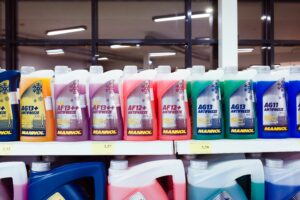
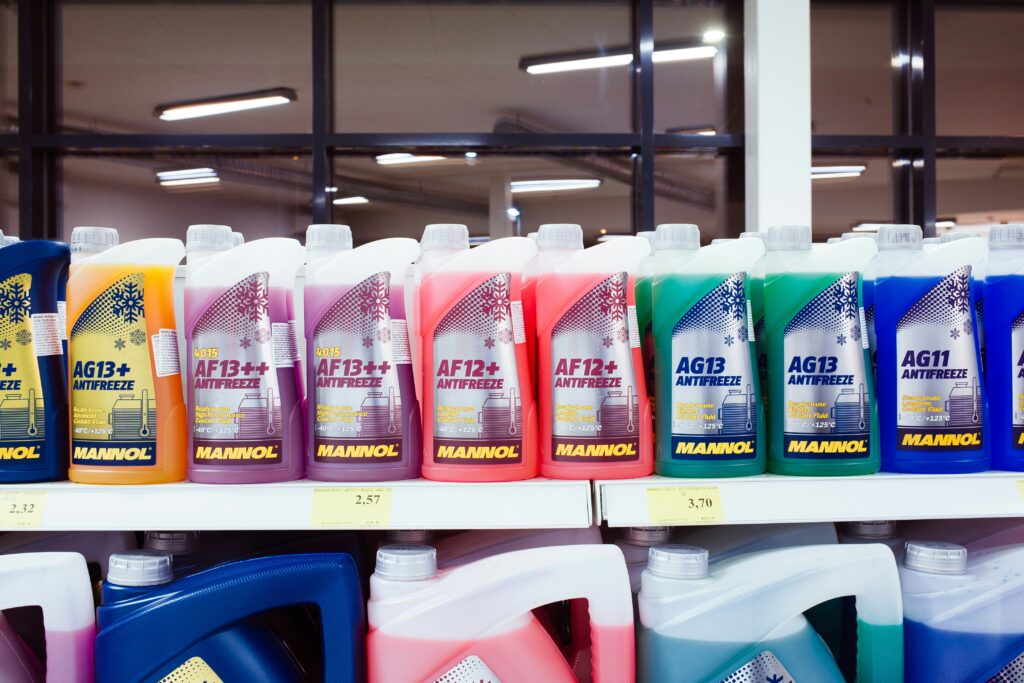
It’s also important not to rely on coolant color when determining compatibility. While certain colors are commonly associated with specific formulations, manufacturers do not follow a universal color standard. Two coolants with the same color may use different chemistry, while compatible products from different manufacturers may look completely different. When in doubt, consult your owner’s manual or the coolant manufacturer’s specifications rather than relying on color alone.
Common Coolant Mistakes to Avoid
Many cooling system problems can be avoided with a few simple maintenance practices. One common mistake is adding concentrated antifreeze directly to the cooling system without mixing it first, unless the manufacturer specifically recommends otherwise. Another is repeatedly topping off the system with plain water, which gradually reduces freeze protection and corrosion resistance.
It’s also important to replace coolant at the intervals recommended by the equipment manufacturer. While modern extended-life coolants can last much longer than traditional formulations, they don’t last forever.
How to Choose the Right Coolant
If you’re unsure what product your equipment needs, start by checking your owner’s manual or equipment documentation for the recommended coolant specification. Then determine whether you want a concentrated product or a pre-mixed coolant based on your maintenance practices. Finally, purchase a product that meets the manufacturer’s requirements rather than selecting one based only on brand, price, or color.
Although the terms are often used interchangeably, antifreeze and coolant aren’t exactly the same thing. Understanding the difference can help you choose the right product, avoid compatibility issues, and keep your equipment’s cooling system performing as intended.
Bellman Oil supplies antifreeze and coolant products for farms, fleets, contractors, and businesses throughout Northern Indiana and Southwest Michigan. If you’re unsure which product is right for your equipment, our team can help you find a solution that fits your application.