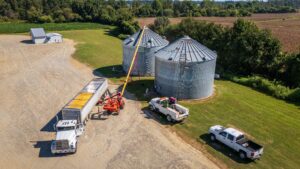
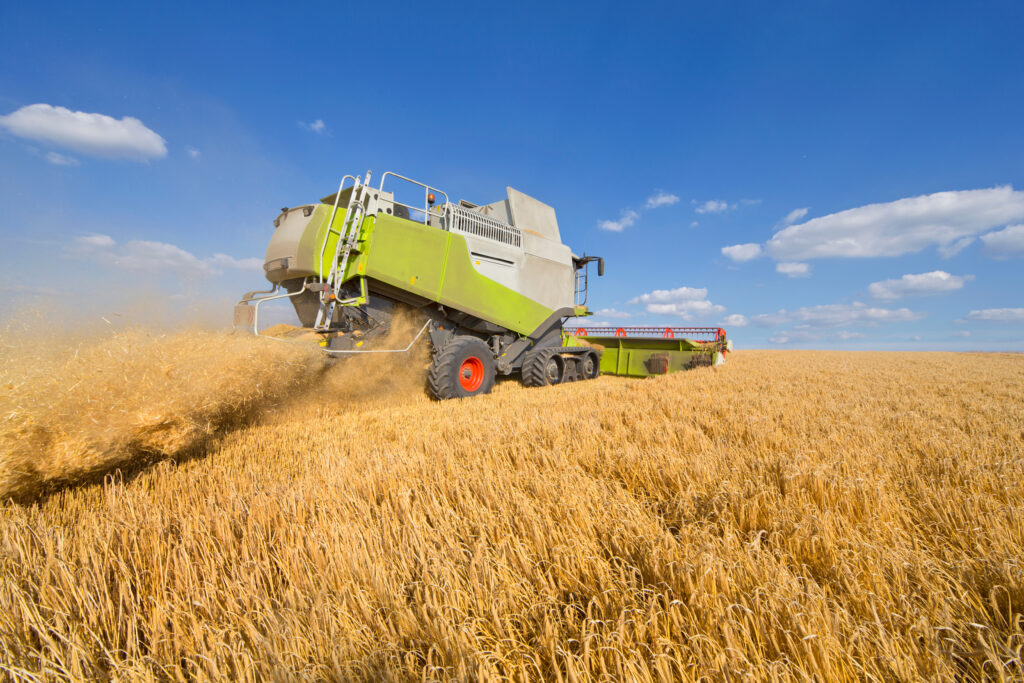
Knowing how much fuel a combine uses and what drives that number up or down is essential for budgeting for harvest season, sizing your on-farm storage, and scheduling bulk fuel delivery before the rush. Let’s take a look at how fuel consumption rates change so that you can calculate your combine’s fuel demand.
How Much Fuel Does a Combine Use?
Before getting into class-specific numbers, it helps to understand one foundational concept: fuel burn tracks engine load, not calendar time. The American Society of Agricultural and Biological Engineers (ASABE) establishes a widely used benchmark of 0.044 gallons of diesel per horsepower-hour at rated PTO power and full engine load. At partial load, which is where most combines operate most of the time, actual consumption is lower, typically 60 to 80 percent of the rated-load figure.
This means a 400-hp combine running at 75 percent engine load will burn roughly:
400 hp × 0.044 gal/hp-hr × 0.75 load factor = 13.2 GPH
This is a useful starting point, but it is important to note that combine fuel use is more variable than tractor fuel use. The power needs of a combine’s threshing and separation systems vary with crop volume and field conditions.
Combine Fuel Consumption by Class: GPH Reference Table
The table below reflects typical field operating ranges drawn from ASABE standards, Nebraska Tractor Test Laboratory data, and reported operator figures across major OEM platforms. These are harvest-operation ranges, not idle or transport figures.
| Combine Class | Typical Engine HP | GPH Range (Active Harvest) | Common Models |
| Class 5 | Under 280 hp | 6–10 GPH | Older/smaller mid-size machines; most current production models start at Class 6 |
| Class 6 | 280–360 hp | 9–14 GPH | JD S760 (320 hp), Case IH 7120 (~359 hp) |
| Class 7 | 360–500 hp | 12–18 GPH | JD S670 (373 hp), JD S780 (473 hp), Case IH 7230 (~402 hp), Case IH 8230 (~469 hp), NH CR7.90 (460 hp) |
| Class 8 | 500–600 hp | 16–22 GPH | JD S790 (543 hp), Case IH 8250 (~563 hp), NH CR8.90 (571 hp), NH CR9.90 (~563 hp) |
| Class 9 | 600–680 hp | 20–26 GPH | JD X9 1000 (630 hp), Case IH 9250 (625 hp), NH CR10.90 (653 hp rated) |
| Class 10 | 680+ hp | 24–30 GPH | JD X9 1100 (690 hp), NH CR10.90 Revelation (700 hp max), CLAAS LEXION 8900 (~790 hp) |
Notes on the table: These ranges assume normal field conditions with appropriate header sizing. Light crops (dry wheat, thin stands) will land at the low end. Heavy, tough, or green crops will push toward the upper end or beyond. All figures assume modern Tier 4 Final engines, which burn measurably less fuel than pre-emissions machines of equivalent horsepower.
Combine Fuel Consumption Per Acre by Crop
Gallons per hour is useful for fuel planning, but gallons per acre tells you more about operating efficiency. Here are typical ranges based on operator-reported data and university extension benchmarks:
| Crop | Typical Gal/Acre Range | Notes |
| Wheat (small grain) | 0.5–0.9 gal/acre | Dry conditions, high field efficiency |
| Soybeans | 0.7–1.2 gal/acre | Wider range due to moisture variability |
| Corn | 0.8–1.5 gal/acre | Higher due to throughput volume |
| Corn (high moisture) | 1.2–2.0 gal/acre | Tough threshing conditions |
| Canola / small seeds | 0.9–1.6 gal/acre | Swath pickup adds load |
When fuel use per acre exceeds 1.5 gallons under normal conditions, it typically indicates a machine setup issue, excessive field inefficiency, or equipment that’s undersized for the job.
What Drives Combine Fuel Consumption Variability
The spread within each class can be substantial. A Class 7 combine might burn 13 GPH harvesting dry wheat and 18 GPH in green, tough soybeans the following week. Here’s what moves the needle:
Crop type and yield
Corn generally requires more fuel per hour than wheat because of its higher throughput volume and kernel-processing requirements. High-yield years mean more material through the machine and more engine load. An above-average corn year can push fuel use 15 to 20 percent above baseline.
Crop moisture
Wet grain and green straw are the biggest drivers of fuel costs. High-moisture material is harder to thresh and creates more load on the rotor or cylinder. A combine harvesting 30 percent moisture corn will burn significantly more than the same machine running 15 percent corn at the same ground speed.
Ground speed and header width
More acres per hour means more material per hour, which means more fuel per hour, but often less fuel per acre, since the fixed overhead of keeping systems running is spread across more harvested ground. Running a header that’s undersized for the machine leaves horsepower on the table and distorts fuel efficiency metrics.
Terrain and field conditions
Hilly ground increases drawbar demand and forces the engine to work harder on climbs. Lodged or downed crops slow ground speed and increase separator load simultaneously.
Machine condition and age
Worn concave wires, plugged air filters, out-of-spec cylinder speeds, and low tire pressure all increase fuel consumption. A well-maintained machine of the same model and HP will consistently outperform a poorly maintained one. Fuel quality also matters: clean, properly stabilized high-quality diesel fuel maintains injector performance and combustion efficiency across the season.
Rotor vs. walker design
Rotary combines generally burn more fuel at peak throughput than conventional straw-walker designs of similar horsepower, but they also process more bushels per hour. Fuel per bushel, rather than fuel per hour, is usually the more meaningful efficiency metric for rotary machines working at capacity.
How to Calculate Your Daily Combine Fuel Consumption: A Worked Example
Here’s how to estimate fuel demand for a real planning scenario.
Setup:
- Machine: Class 8 combine, 543 hp (e.g., John Deere S790 or Case IH 8250)
- Crop: Corn, above-average yield, 20 percent moisture
- Operating load estimate: 80 percent engine load (heavy conditions)
- Planned operating hours per day: 12 hours
Step 1: Estimate GPH using the ASABE formula with load factor:
543 hp × 0.044 gal/hp-hr × 0.80 load = 19.1 GPH
Given moisture and crop volume, round up to 20 GPH to reflect real-world rotor load.
Step 2: Calculate daily fuel demand for the combine:
20 GPH × 12 hours = 240 gallons per day
Step 3: Add support equipment:
- Grain cart tractor (200 hp, 50% load): 200 × 0.044 × 0.50 = 4.4 GPH × 12 hrs = ~53 gallons
- Tender truck or service vehicle: ~10–15 gallons
Total estimated daily diesel demand: 300–315 gallons
That’s a practical number for ordering bulk fuel, sizing your on-farm storage, or planning delivery schedules with your fuel supplier. For agricultural and farming fuel service that keeps up with harvest pace, pre-planning your volume requirements is the difference between a smooth season and a costly delay.
Tractor and Grain Cart Fuel Consumption During Harvest
The combine gets the attention, but the demand for harvest fuel extends well beyond it. Plan for these additional loads:
- Grain cart tractors typically run 150 to 250 hp at moderate load. This is 6 to 12 GPH, depending on size and how hard the tractor is working to keep up with the combine.
- Semi trucks and grain haulers average 6 to 8 miles per gallon under load. A 30-mile round trip to the elevator burns 7 to 10 gallons per run, and busy operations require 4 to 6 runs per truck daily.
- Field service trucks and nurse trailers burn 1 to 2 gallons per hour at idle with PTO equipment running.
In a full-harvest operation running two combines, two grain carts, and multiple trucks, total daily diesel demand can easily reach 600-800 gallons. Getting that fuel efficiently requires reliable bulk delivery, not retail pump runs.
How to Reduce Combine Fuel Consumption Without Losing Throughput
Aggressive fuel-saving tactics that compromise throughput rarely pencil out. The fuel savings that may come from these measures don’t offset the lost capacity. The tactics that actually work reduce waste without slowing the machine:
Match ground speed to conditions
Running faster than the separator can efficiently handle increases fuel consumption without increasing throughput. The machine works harder to process a surging crop stream, and fuel efficiency drops.
Keep air filters clean
A restricted air filter forces the engine to work harder to maintain power output. During dusty harvest conditions, inspect filters daily.
Service concaves and rotors on schedule
Worn components require more energy to achieve equivalent threshing action.
Use auto-steer and GPS guidance
Overlap waste burns extra fuel and reduces effective field efficiency. Even a 5 percent overlap on a 40-foot header adds up quickly across a full season.
Reduce idle time
Modern Tier 4 combines can burn 2 to 4 GPH at high idle with all systems running. End-of-field turns and unloading stops add up over a 12-hour day.
Run high-quality, clean diesel
Contaminated or degraded fuel reduces combustion efficiency and can cause injector wear that permanently increases consumption. Fuel quality matters more in high-load harvest applications than in any other farm use.
Frequently Asked Questions
How much fuel does a John Deere combine use per hour?
It depends on the model and class. A John Deere S760 (Class 6, 320 hp) typically burns 9 to 14 GPH during active harvest. The S790 (Class 8, 543 hp) runs 16 to 22 GPH under load. The X9 1100, Deere’s flagship Class 10 machine at 690 hp, can reach 24-30 GPH in heavy corn. Lighter crops and lower engine loads will fall toward the bottom of those ranges.
How much fuel does a Case IH combine use per hour?
Case IH Axial-Flow combines follow similar consumption patterns to comparable John Deere models. The 7120 (Class 6, ~359 hp) runs 9 to 14 GPH; the 8250 (Class 8, ~563 hp) runs 16 to 22 GPH; the 9250 (Class 9, 625 hp) runs 20 to 26 GPH in demanding conditions. As with any combine, actual diesel consumption depends heavily on crop type, moisture, and how aggressively the machine is being pushed.
What is normal diesel consumption per acre for a combine?
In normal harvest conditions, most modern combines run 0.5 to 0.9 gallons per acre in wheat, 0.7 to 1.2 gallons per acre in soybeans, and 0.8 to 1.5 gallons per acre in corn. High-moisture corn can exceed 2.0 gallons per acre under tough conditions. If you’re consistently above 1.5 gallons per acre in average conditions, it’s worth reviewing machine settings and field efficiency.
Do larger combines use more fuel per acre or just more per hour?
Primarily more per hour, but typically less per acre. Larger machines cover more acres per hour, spreading the fuel cost across more harvested ground. The real efficiency advantage of a Class 9 or 10 machine over a Class 6 shows up in fuel per bushel and fuel per acre, not fuel per hour.
How does crop moisture affect combine fuel consumption?
Significantly. High-moisture grain creates more mechanical resistance in the threshing and separation systems. Harvesting corn at 25 percent moisture versus 16 percent can increase fuel consumption by 10 to 20 percent at the same ground speed, because the rotor or cylinder must work harder to process wet, sticky material.
How do I estimate combine fuel use before harvest starts?
Use the ASABE baseline formula: engine HP × 0.044 gal/hp-hr × estimated load factor. For most combines in typical conditions, a load factor of 0.65 to 0.80 is realistic. Build in a 10-15% buffer for tough days, and don’t forget support equipment. Grain cart tractors commonly add 30 to 40 percent to your combine’s daily fuel demand.
Ensure your Fuel Supply Meets your Needs
Ready to make sure your fuel supply keeps pace with harvest? Contact Bellman Oil to discuss bulk diesel delivery, on-farm storage solutions, and harvest fuel planning for your operation.