Off-road diesel and on-road diesel are chemically the same fuel, but they sit on opposite sides of a tax line that can cost Indiana farmers thousands of dollars if crossed in the wrong direction. Join us as we cover who can use dyed diesel, what the tax savings look like in real numbers, what happens if the fuel ends up in the wrong tank, and how most northern Indiana farmers actually buy and store it.
Off-Road Diesel vs. On-Road Diesel: What’s the Difference?
Many people think all diesel is the same. However, this couldn’t be further from the truth. Off-road diesel and on-road diesel have different use cases, legal requirements, and taxes. Though these two kinds of fuel are essentially composed the same way, they are taxed differently. On-road diesel, or the kind of diesel you can buy at a gas station, is clear and intended to be used for highway-ready vehicles. This kind of diesel is subject to certain federal and state excise taxes.
Alternatively, off-road diesel is dyed using a Solvent Red dye and is exclusively intended for machinery that is not highway-ready, like farm equipment, construction vehicles, or other commercial machinery. This red-dyed diesel is exempt from excise taxes, making it significantly cheaper than on-road fuel.
Can Farmers Use Off-Road Diesel in Indiana?
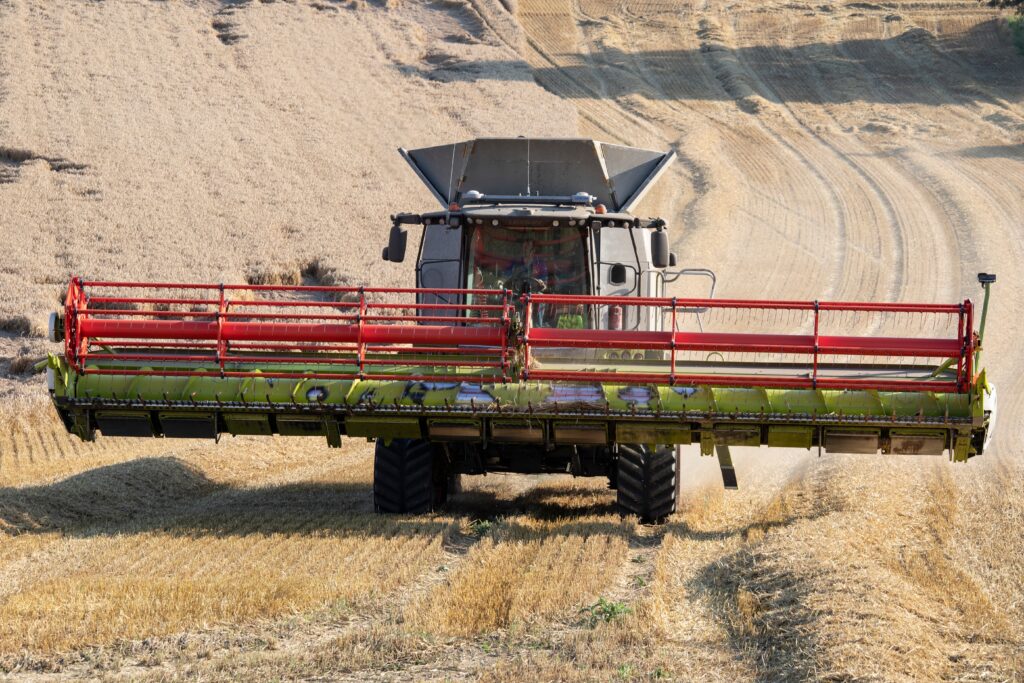
The rule is straightforward: dyed diesel is legal in any engine not installed in a vehicle that is registered, or required to be registered, for highway use. For farmers in northern Indiana, that covers a lot of ground:
- Tractors, combines, planters, sprayers, and other farm equipment
- Grain dryers and on-farm irrigation pumps
- Skid steers, forklifts, and loaders are used exclusively on the property
- Stationary engines and backup generators
Farm trucks present some confusion when it comes to this rule. A pickup or semi that hauls grain, equipment, or supplies on public roads needs to run on on-road diesel, full stop. The same truck can’t pull from a dyed diesel tank just because it spent the morning in the field. Bottom line: if the vehicle is registered for road use, it needs on-road diesel.
Why Is Off-Road Diesel Dyed Red?
Under IRS regulations, any diesel sold for a tax-exempt, non-highway purpose must be dyed with Solvent Red 164 before it ever leaves the fuel terminal. The dye must be added at a concentration spectrally equivalent to at least 3.9 pounds of Solvent Red 26 per thousand barrels of fuel, and it has to be mechanically injected during production. No distributor can sell untaxed clear diesel. This is the core distinction in the red diesel vs clear diesel conversation: color is the legal signal.
The dye serves one purpose: to give inspectors an instant, visible indicator that the tax has or hasn’t been paid. If the fuel in your tank is red, it’s off-road fuel. If it’s clear, the tax was collected at the terminal. That distinction is what the Indiana State Police look for during roadside commercial vehicle inspections.
What Is the Farm Diesel Tax Exemption?
The reason dyed diesel is cheaper is simple: it doesn’t carry the taxes that fund public road maintenance, because off-road equipment doesn’t use public roads. The farm diesel tax exemption exists to reflect that reality, and Diesel is one of the most economically significant fuels in the country, so the tax structure behind it is worth understanding.
Here’s what those taxes look like for the current period:
- Federal highway excise tax: 24.3 cents/gallon (plus 0.1 cents for the Leaking Underground Storage Tank trust fund, totaling 24.4 cents/gallon)
- Indiana special fuel tax: $0.61/gallon (FY July 2025 through June 2026, per the Indiana Department of Revenue)
- Combined exemption value: approximately 85 cents/gallon before any market variation
On a 500-gallon farm tank fill, that’s roughly $425 in tax savings per fill. Over a planting or harvest season, the numbers add up quickly for operations running multiple pieces of equipment.
A note on sales tax: Indiana’s special fuel tax exemption is separate from sales tax treatment. Talk to your tax professional about how your specific purchases are classified.
What Are the Penalties for Violating Dyed Diesel Rules in Indiana?
This is the part of the conversation that matters most for farms with both highway trucks and off-road equipment sharing a fuel yard. Dyed diesel rules exist at both the federal and state levels, and penalties for misuse are steep.
Indiana state penalties (Indiana Code 6-6-2.5-62, enforced by ISP and the Department of Revenue):
- First offense: $200 civil penalty
- Second offense: $2,500
- Third or subsequent offense: Class D felony charge (in addition to civil penalties)
Federal IRS penalties (26 U.S.C. § 6715):
- The greater of $1,000 or $10 per gallon of dyed fuel involved, whichever is higher
- A 50-gallon tank violation: $1,000 minimum
- A 150-gallon tank violation: $1,500
- Repeat violations multiply the base penalty
The federal and state penalties stack. One incident can trigger both, and the IRS has explicitly stated there is no reasonable-cause exception to the federal penalty.
One additional risk specific to farms with bulk storage: if an inspector finds dyed fuel in a highway vehicle and traces it back to a bulk tank on the property, that entire tank’s contents can be considered “involved” in the violation. Courts have upheld penalties calculated against the full tank volume in some cases, not just the fuel in the truck.
A quick note on roadside testing: Indiana State Police commercial vehicle enforcement units routinely test fuel in CMVs operating on Indiana highways. The test is a simple dip sample. Even trace amounts of red dye trigger a citation. Refusing to allow a sample is a separate $1,000 federal penalty.
This section is informational, not legal or tax advice. If you have questions about how your operation is structured, consult a tax professional familiar with agricultural fuel exemptions.
How Do Indiana Farmers Buy and Store Off-Road Diesel?
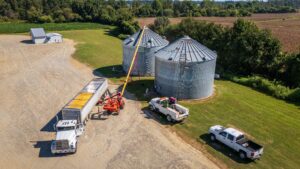
Most ag operations in Marshall, St. Joseph, Elkhart, and surrounding counties that run more than two or three pieces of equipment buy dyed diesel in bulk rather than driving to a pump. Fuel quality matters as much as fuel cost for equipment that runs hard through planting and harvest. The common setup includes on-farm bulk tanks for both types of diesel, scheduled delivery, and accurate tank monitoring.
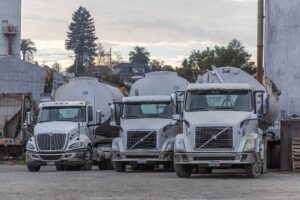
On-farm bulk tanks are the most cost-efficient option once volume justifies it. A supplier delivers directly to a tank on your property, typically 250 to 1,000+ gallons per fill, depending on your equipment and acreage. The tank feeds field equipment directly and keeps your farm trucks at a separate, clearly labeled source.
Scheduled delivery during peak seasons (planting in May, harvest in October) means the fuel is there when you need it, without coordinating last-minute orders during a tight weather window.
Tank monitoring lets suppliers like Bellman track your levels remotely and schedule refills before you run low, which is particularly useful during multi-day planting or combining runs when stopping to deal with fuel logistics costs more than the fuel itself.
The key operational practice: Label your tanks clearly and keep dyed fuel physically separated from any source that feeds highway vehicles. That separation is your best protection if your operation is ever inspected.
FAQs
Can I use dyed diesel in my farm truck?
No, not if that truck operates on public roads. A farm truck used on Indiana highways must run on taxed, clear diesel. The only exceptions are narrow situations (certain government vehicles, registered dyed fuel users approved by the Indiana DOR) that don’t apply to standard farm operations.
Does the color of dyed diesel affect engine performance?
No. Off-road and on-road diesel are the same fuel chemically. The red dye is added at the terminal for tax identification purposes only and has no effect on engine performance, fuel economy, or injector wear.
What happens if dyed and clear diesel accidentally mix in a tank?
Any mixture that contains dyed fuel is treated as dyed fuel under federal law. If that mixed fuel ends up in a highway vehicle, the penalty applies to the full quantity in the tank.
Can I get a refund if I accidentally paid road tax on fuel used only for farm equipment?
Yes. Indiana allows refunds for special fuel taxes paid on fuel used for exempt purposes. The process involves filing Form REF-1000 with the Indiana Department of Revenue. Keep purchase records and documentation of how the fuel was used.
How do I know if my fuel supplier is delivering legitimate dyed diesel?
IRS regulations require that any pump dispensing dyed fuel be labeled: “DYED DIESEL FUEL, NONTAXABLE USE ONLY, PENALTY FOR TAXABLE USE.” Any reputable supplier will have this labeling on equipment used to dispense off-road fuel.
Do I need a special license to buy dyed diesel?
No. Anyone can purchase dyed diesel without a permit. The restrictions are on use, not purchase.
Ready to Set Up Bulk Dyed Diesel Delivery for Your Operation?
Bellman Oil delivers off-road diesel directly to farms across northern Indiana and southwest Michigan, with remote tank monitoring and flexible delivery scheduling built around your season. Contact Bellman to talk through your fuel setup.