Antifreeze is a temperature-regulating coolant used in engines, HVAC systems, industrial equipment, and other mechanical systems exposed to extreme heat or cold. When mixed with water, it lowers the freezing point and raises the boiling point of the solution, helping systems operate efficiently in extreme temperatures. Antifreeze also interferes with ice crystal formation and improves heat transfer.
Common Base Ingredients
- Ethylene glycol – highly effective for heat transfer but toxic
- Propylene glycol – less toxic; used where human or animal exposure is possible
Additives such as corrosion inhibitors, antifoaming agents, and dyes improve system protection and performance.
Types of Antifreeze
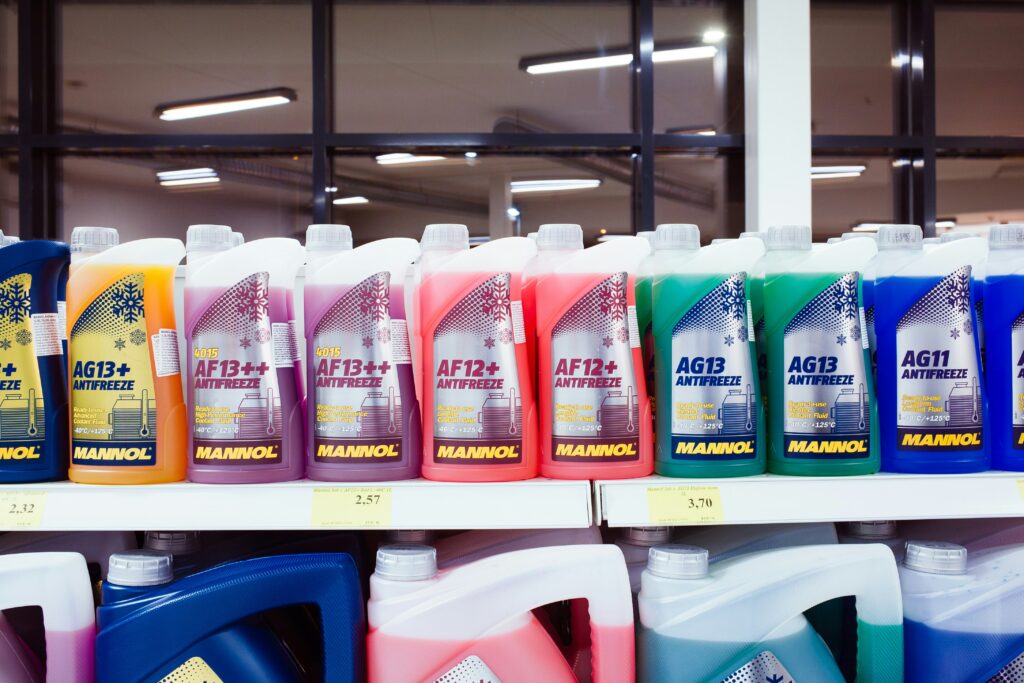
1. Conventional Green Antifreeze (IAT)
- Typically green
- Uses silicates and phosphates
- Best for older vehicles
- Shorter lifespan; requires more frequent replacement
2. Extended Life Antifreeze (OAT)
- Usually orange or red
- Long-lasting protection
- Common in modern vehicles
- Not always suitable for older systems
3. HOAT Antifreeze (Hybrid Organic Acid Technology)
- Often orange or yellow
- Combines OAT and IAT benefits
- Excellent corrosion resistance
- Compatible with many domestic and European vehicles
How Antifreeze Works
Prevents Freezing
Lowers the freezing point to stop coolant from turning into ice and damaging components.
Prevents Overheating
Raises the boiling point to keep coolant stable during high-heat conditions.
Improves Heat Transfer
Absorbs heat from engines or equipment and moves it to the radiator or heat exchanger.
Protects Against Corrosion
Inhibitors prevent rust, scale buildup, and internal damage.
Industries That Rely on Antifreeze
Automotive & Transportation
Includes passenger vehicles, diesel engines, fleets, construction machinery, and agricultural equipment.
Industrial Manufacturing
Used in cooling loops, molding equipment, CNC machines, chemical processing, and power generation.
Commercial & Residential HVAC
Supports boilers, chilled water loops, hydronic heating, and freeze protection.
Food & Beverage Processing
Used in glycol chillers, beverage cooling, dairy operations, and temperature-controlled storage.
Energy & Utilities
Essential for solar thermal systems, geothermal loops, power plants, and generator cooling.
Aviation & Aerospace
Used in aircraft de-icing, ground equipment cooling, and runway safety operations.
Recreational & Specialty Applications
Includes marine engines, ice rinks, RV systems, and specialty refrigeration.
Applications of Antifreeze
- Engine cooling systems
- HVAC loops
- Industrial cooling processes
- Refrigeration (e.g., rinks and storage)
- Aircraft de-icing
- Marine systems
How to Choose the Right Antifreeze
Follow Manufacturer Guidelines
Always check system or engine manuals.
Consider Climate Conditions
Cold climates may require stronger freeze protection; hot environments may prioritize boil-over stability.
Check Compatibility
Mixing coolant types can reduce performance.
Evaluate System Materials
Some metals require specific inhibitors.
Bellman Oil Can Help
Bellman Oil assists businesses, fleet operators, and individuals in selecting the ideal antifreeze for their specific systems and climate conditions. Contact us to learn more about our high-quality coolants, engine oils, and industrial fluids.